Quick Shop: Stocked Australian Commercial Door Closers (24-48hr Victorian Dispatch)
Order genuine AS 1905.1 fire-rated hydraulic door closers direct from our Victorian warehouse with free Australia-wide shipping on orders over $149.95 AUD ($9.95 AUD flat-rate shipping under $149.95 AUD):
1. Commercial Hydraulic Door Closers Hub: Browse all overhead rack-and-pinion and cam-action closers in our Commercial Door Closers Category.
2. Dormakaba & Lockwood Trade Closers: Compare Dormakaba Hydraulic Door Closers and Lockwood Commercial Hardware stocked for immediate dispatch.
3. Commercial Mortice Locks & Melbourne Installation: Pair your closer with AS 1905.1 Commercial Mortice Locks, or book on-site commercial closer installation across Melbourne and Victoria via All Secure Locksmiths on (03) 9306 6760 or 0421 149 760.
Selecting and calibrating a commercial door closer australia facility managers, builders, and body corporate committees can rely on is essential for statutory fire containment, acoustic control, and Disability Discrimination Act (DDA) accessibility. If an overhead hydraulic door closer is undersized for a heavy solid-core fire door or adjusted improperly, the door will either slam violently into the frame keeper or fail to latch completely against corridor air pressure during an annual Essential Safety Measures inspection. This trade engineering guide covers EN power sizing, Dormakaba TS68 vs TS93 mechanisms, fire door rules, and step-by-step hydraulic valve adjustment.
Commercial Door Closer Australia: EN2 to EN6 Power Size Chart
Every commercial door closer australia wide is graded under the European and Australian EN 1154 standard from Power Size EN1 (lightest) to EN6 (heaviest) based on two physical measurements: the horizontal width of the door leaf in millimetres and the total mass of the door in kilograms. On multi-size adjustable closers such as the Dormakaba TS68 (adjustable EN2, EN3, or EN4), you set the spring power either by rotating the arm mounting shoe or shifting the body template position relative to the top butt hinge.
Australian Trade Power Size Reference:
• Power Size EN2 (Up to 850mm Door Width / 40kg Mass): Light internal office passage and consulting room doors.
• Power Size EN3 (Up to 950mm Door Width / 60kg Mass): Mandatory minimum setting for statutory internal fire doors and standard 820mm to 920mm strata apartment entry doors.
• Power Size EN4 (Up to 1,100mm Door Width / 80kg Mass): Wide commercial corridor doors, hospital doors, and perimeter shopfront entries exposed to moderate wind.
• Power Size EN5 to EN6 (1,250mm to 1,400mm Width / 100kg to 120kg Mass): Heavy industrial plant room doors and tall external doors subject to strong coastal wind gusts.

Dormakaba TS68 vs TS93 Closer: Scissor Arm vs Cam-Action Slide Rail
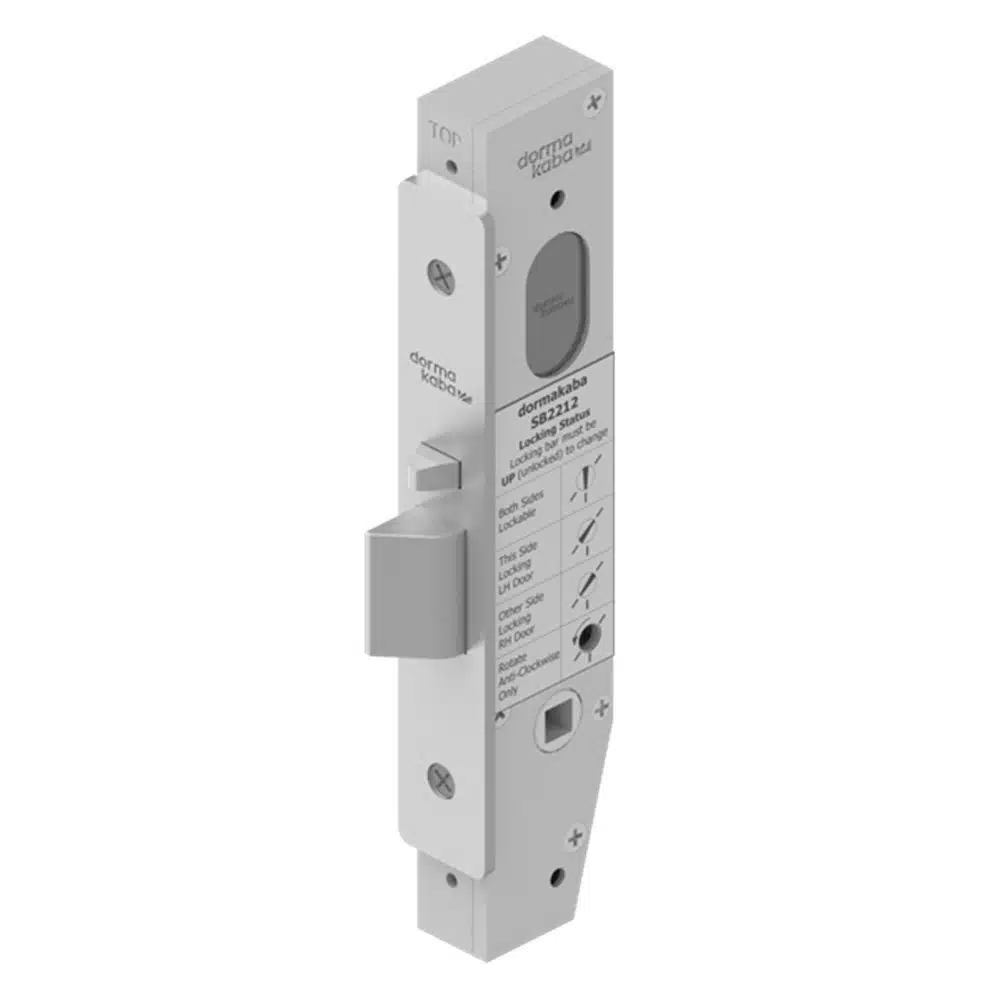
When specifying a dormakaba ts68 vs ts93 closer for an Australian commercial project, the core mechanical difference is how the internal piston transfers opening torque as the user pushes the door open. The Dormakaba TS68 is the industry workhorse scissor-arm rack-and-pinion closer: it is compact, suits standard pull-side, push-side transom, and parallel-arm configurations on timber and aluminium doors up to 1,100mm wide, and offers rapid template installation across strata apartment blocks, schools, and retail tenancies.
By contrast, comparing a dormakaba ts68 vs ts93 closer for healthcare, aged-care, or public council buildings highlights Dormakaba's heart-shaped EASY OPEN cam-action technology inside the TS93 slide-channel series. Unlike a traditional rack-and-pinion spring whose resistance increases as you start pushing the door, a cam-action slide closer drops opening resistance immediately by up to 40% while still delivering full EN2-5 or EN5-7 closing torque at the latch point so children, elderly residents, and wheelchair users can open fire doors effortlessly under AS 1428.1 accessibility guidelines.
AS 1905.1 Fire Rated Door Closer Rules & Parallel Arm Mounting
Every as 1905.1 fire rated door closer installed on a statutory fire stairwell, sole-occupancy apartment entry, or commercial service riser must satisfy National Construction Code (NCC) and Standards Australia AS 1905.1 testing. Specifically, a fire door closer must be set to a minimum closing power of EN3, must positively self-close and self-latch the primary mortice lock or deadlatch from any open angle (including from a 300mm test opening against air pressure), and must never be fitted with a mechanical hold-open arm or floor wedge unless connected to an electromagnetic fire alarm release interface.
When installing an as 1905.1 fire rated door closer in a public corridor or strata hallway, tradespeople typically mount the closer in Parallel Arm configuration on the internal push side of the door. This folds the scissor arm neatly beneath the top frame reveal out of reach of corridor vandals while keeping the exterior hallway face clean.
How to Adjust Door Closer Speed Valves Without Ruining Hydraulic Seals
Learning how to adjust door closer speed valves takes two minutes with a small flat-blade screwdriver or hex key, provided you never unscrew a hydraulic valve more than two full counter-clockwise turns from its seated position (unscrewing a valve too far blows out the O-ring seal and leaks hydraulic oil, requiring a full closer replacement). Always make tiny one-eighth turn adjustments:
1. Valve 1 - Main Closing / Sweep Speed (180° down to 15°): Controls how fast the door travels across its main arc. Turn clockwise (in) to slow the door down, or counter-clockwise (out) to speed it up. Aim for a calm 4 to 6 second sweep from 90 degrees open down to 15 degrees.
2. Valve 2 - Final Latching Speed (15° down to 0° Closed): Controls the final 15 degrees so the door overcomes air pressure, perimeter smoke seals, and the mortice latch spring without slamming. If a fire door stops resting against the strike lip without clicking shut, turn the Latching Valve slightly counter-clockwise (1/8th turn) to give it a crisp final snap.
3. Backcheck (BC) Valve (70° to 180° Opening Cushion): When you adjust door closer speed valves on external doors, hydraulic backcheck provides a cushioned brake above 70 degrees open so a sudden wind gust or forceful push cannot slam the lever handle into adjacent brickwork (backcheck does not replace a physical floor or wall door stop).
Frequently Asked Questions
Why is my commercial door closer slamming even when I tighten the valves?
If turning both hydraulic screws clockwise does not slow down your commercial door closer australia unit, and you notice dark oil residue on the body housing, an internal hydraulic seal has ruptured. Hydraulic door closers are sealed factory units and cannot be refilled; replace the body directly from our stocked Commercial Door Closers range.
Which way do I turn the screws to adjust door closer speed valves?
To adjust door closer speed valves safely, turn the screw clockwise (tightening inward) to restrict hydraulic oil flow and slow the door down, or turn it counter-clockwise (loosening outward in 1/8th-turn increments) to increase oil flow and speed the door up.
Can I book a licensed locksmith to replace fire door closers in Melbourne?
Yes. For compliant commercial door closer australia supply across the nation or on-site fire door closer installation across Metropolitan Melbourne and Regional Victoria, contact All Secure Locksmiths on (03) 9306 6760 or 0421 149 760.